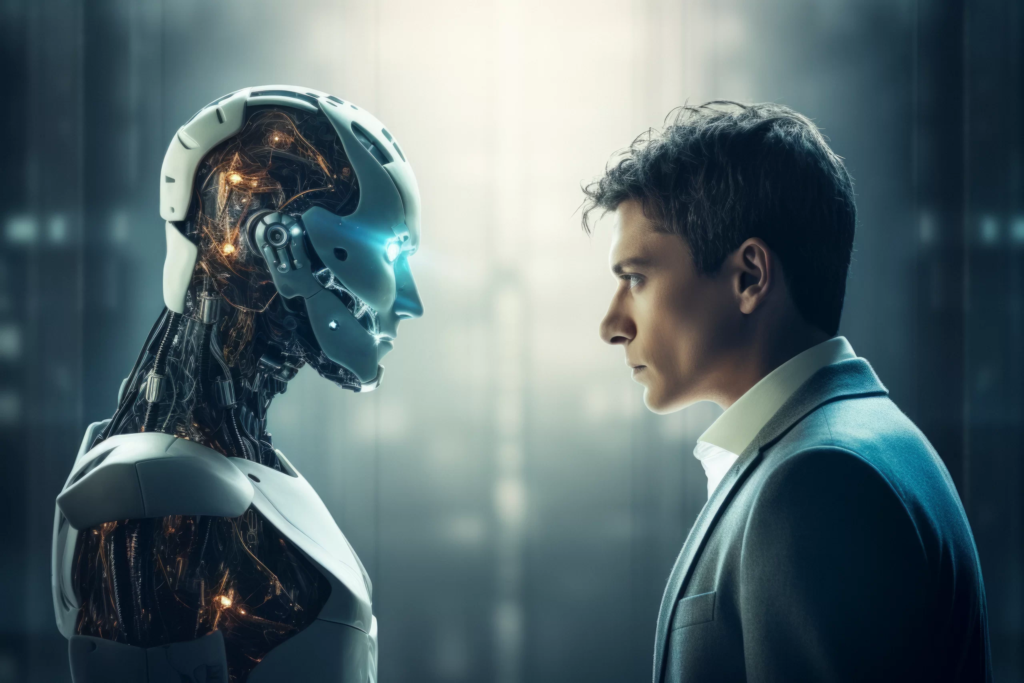
Every few months, there’s a new panic headline.
“AI will take your job.”
“10 careers that won’t exist in 5 years.”
“Humans are finished.”
I’ve been writing about tech for more than five years, and honestly, I’ve seen this fear cycle repeat again and again. First it was computers. Then automation. Then the internet. Now AI.
But when you look beyond YouTube thumbnails and LinkedIn drama, the reality of AI vs human jobs is much more boring… and much more practical.
So let’s talk honestly. No hype. No fear-mongering. Just what is actually changing, and what isn’t.
Why People Are So Scared of AI Taking Jobs
Most fear comes from half information.
People see AI:
- Writing content
- Generating images
- Answering questions
- Writing basic code
And they assume, “Okay, I’m next.”
But they miss one important detail — AI doesn’t understand context like humans do. It predicts, it doesn’t think.
I’ve personally tested AI tools daily. They are impressive, yes. But they still need human direction, correction, and judgment.
That’s where most “AI will replace everyone” arguments fall apart.
Jobs That Will Change (Not Disappear)
Let’s be clear — some jobs will change. Pretending otherwise is stupid.
But change doesn’t mean extinction.
Content Writing & Blogging
This one hits close to home.
Yes, AI can write articles.
No, it can’t replace real writers completely.
What’s changing:
- Writers who only rewrite generic info will struggle
- Writers who add experience, opinion, and insight will grow
I use AI sometimes to structure ideas or beat writer’s block. But the final voice? That’s human.
Reality:
AI becomes a tool. Writers become editors, thinkers, storytellers.
Customer Support Jobs
Basic support roles are already changing.
Chatbots now handle:
- Order status queries
- Basic FAQs
- Simple troubleshooting
But when things go wrong — payment issues, angry customers, emotional situations — humans still step in.
What changes:
Less repetitive work, more problem-solving roles.
Data Entry & Repetitive Office Work
This is where AI impact is real.
Jobs involving:
- Copy-pasting
- Basic form filling
- Repetitive reporting
…will reduce.
I’ve seen companies automate these tasks not because of AI hype, but because it saves money and time.
Truth:
These jobs were never safe long-term, even before AI.
Jobs That Are Safer Than People Think
Not every job is under threat.
Teaching (Real Teaching)
Online courses and AI tutors exist. But good teachers do more than explain textbooks.
They:
- Motivate students
- Adapt to different learning speeds
- Handle emotions and discipline
AI can support teachers, not replace them.
Healthcare
AI helps doctors analyze reports faster. But would you trust AI alone for diagnosis or surgery?
Exactly.
Doctors, nurses, therapists — these jobs need human judgment, empathy, and accountability.
Creative Roles (Real Creativity)
AI can generate designs, music, and art.
But real creativity comes from:
- Cultural understanding
- Emotional depth
- Life experience
AI creates patterns. Humans create meaning.
Big difference.
The Biggest Change Nobody Talks About: Skill Expectations
The real battle of AI vs human jobs is not about replacement.
It’s about expectations.
Earlier:
- Knowing Excel was enough
- Basic writing skills were valuable
Now:
- You’re expected to use tools
- You’re expected to work faster
- You’re expected to think, not just execute
AI raises the baseline.
Average performance is no longer impressive.
AI as a Productivity Multiplier (Not a Boss)
This is how AI is actually used in offices today.
People use AI to:
- Draft emails
- Summarise meetings
- Brainstorm ideas
- Debug small issues
One person with AI now does the work of 1.5 people.
That doesn’t mean firing everyone. It means companies expect more output from fewer people.
Harsh? Yes.
Real? Also yes.
Who Is Most at Risk?
Let’s be blunt.
People most at risk are those who:
- Refuse to learn new tools
- Only do mechanical tasks
- Depend on one narrow skill
Age doesn’t matter. Attitude does.
I’ve seen fresh graduates struggle while experienced professionals adapt easily because they’re flexible.
Who Will Benefit the Most?
People who:
- Learn AI as a tool, not a threat
- Combine domain knowledge with AI
- Focus on problem-solving
For example:
- A marketer who uses AI + understands customer psychology
- A developer who uses AI + understands system design
- A writer who uses AI + understands storytelling
AI rewards people who already think.
Indian Job Market: A Slightly Different Reality
In India, things move slower.
AI adoption exists, but:
- Many companies still use outdated systems
- Human labour is cheaper
- Trust in automation is lower
So mass job loss due to AI in India? Not happening anytime soon.
But competition will increase. That’s unavoidable.
2 Honest Tips From My Experience
1. Don’t chase AI tools blindly
Learn fundamentals first. Tools keep changing. Skills stay.
2. Use AI to upgrade yourself, not replace yourself
If AI saves you time, invest that time in learning something deeper.
That’s how you stay relevant.
Final Thoughts (No Drama)
The debate of AI vs human jobs is often exaggerated.
AI will:
- Replace some tasks
- Change many roles
- Increase expectations
But it won’t replace humans who:
- Think critically
- Adapt continuously
- Add human value
The future doesn’t belong to AI alone.
It belongs to humans who know how to use it wisely.
And honestly?
That’s less scary than the internet makes it sound.